When the body attacks itself, the movement becomes medicine
Autoimmune diseases occur when the immune system mistakenly recognizes its own tissues as a threat and begins to attack them.
The result is inflammation, pain, stiffness and exhaustion. Although these conditions are medically complex, science is increasingly showing that the body can learn to calm down — and that movement is one of the most natural ways to do so.
Stretching, when done consciously and without force, activates the mechanisms that connect the nervous, endocrine and immune systems. In this way, movement becomes a therapeutic tool that helps the body to recover, slow down and feel safe again.
1. The nervous system – the key that governs the immune response
In autoimmune diseases, the body is often “trapped” in stress. The sympathetic nervous system (fight or flight) is overactive, while the parasympathetic nervous system (rest and regenerate) is suppressed.
Scientific studies show that stretching and slow breathing activate the vagus nerve, the main connection between the brain and internal organs.
When the vagus nerve is activated, the pulse rate decreases, blood pressure is lowered, and the body goes into a state of calm. In this state, there is a more favorable regulation of the immune system and a lower level of inflammatory reactions.
2 . Reduction of inflammatory processes through movement
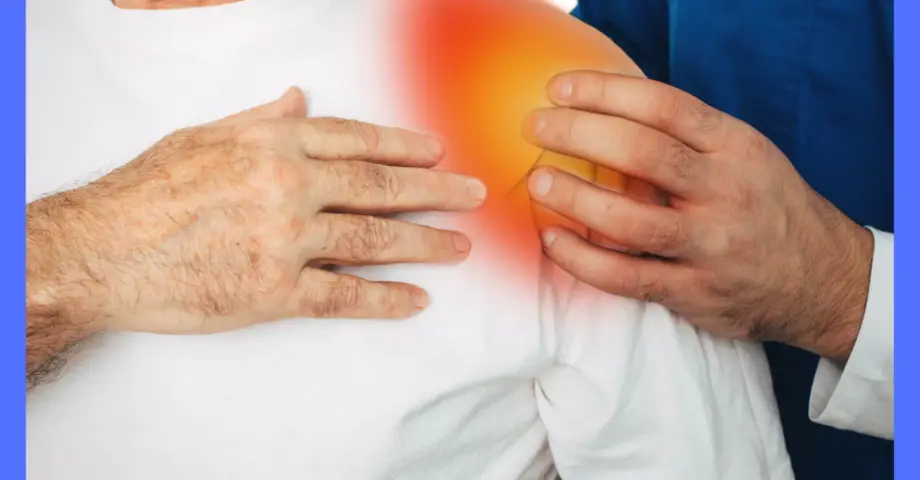
Inflammation is the central mechanism of most autoimmune diseases. Chronic inflammation creates a cycle of pain, stiffness, and fatigue.
Gentle stretching, combined with mindful breathing, has been shown to reduce inflammatory markers such as IL-6 and TNF-α while improving lymphatic and blood flow.
These processes help the body to remove waste products more efficiently, accelerate tissue regeneration, and relieve pain.
In studies conducted in people with rheumatoid arthritis and lupus, regular stretching led to a reduction in stiffness and improved functional mobility.
3 . Cortisol and hormonal balance
In autoimmune diseases, there is often a disorder in the regulation of the HPA-axis (hypothalamic-pituitary-adrenal gland).
This axis controls the secretion of cortisol – a stress hormone that, when constantly elevated, further disrupts the immune balance.
Stretching and slow breathing help lower cortisol and restore the rhythm of the hormonal system.
The body then moves from a state of chronic struggle to a state of stability and regeneration.
4 . Neuromuscular communication and pain control
In many autoimmune conditions, such as multiple sclerosis, rheumatoid arthritis, or scleroderma, there is impaired communication between nerves and muscles.
As a result, the body loses precision of movement, tremors, weakness or stiffness occur.
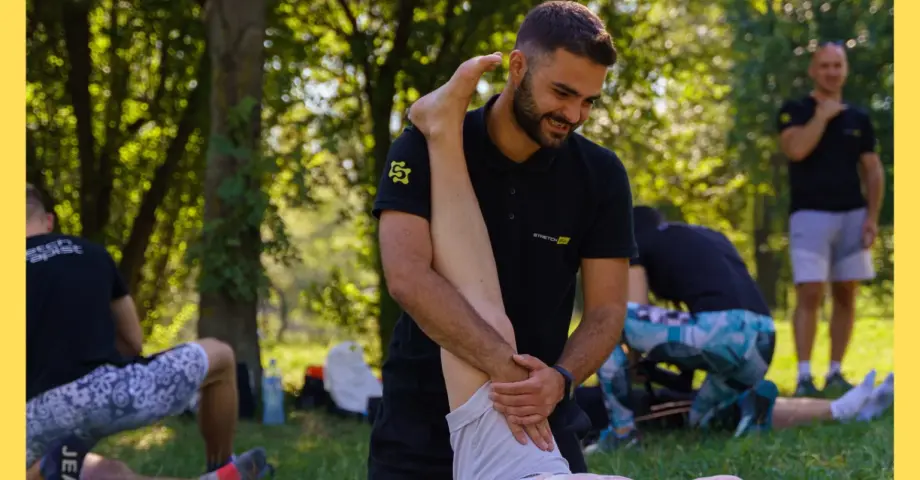
Controlled stretching, assisted by a therapist, improves sensory-motor integration — the way the brain and body communicate.
This process not only restores mobility, but also reduces the hypersensitivity of the nervous system to pain (the so-called central sensitization).
5. Stability, not flexibility – the key to hypermobile states
In certain autoimmune diseases or genetic predispositions, such as Ehlers-Danlos syndrome, the joints are naturally too mobile.
In these cases, the goal of stretching is not to increase flexibility, but to strengthen stabilizing muscles and improve movement control.
Guided stretching combined with deep muscle activation allows the body to find safety in movement, without the risk of injury or additional strain.
6 . Emotional component – when the body learns to calm down, and the mind changes
Autoimmune diseases also often carry an emotional burden: anxiety, frustration and fear.
Conscious stretching, combined with breathing, also acts on the emotional center of the brain (the amygdala). By activating the parasympathetic nervous system and increasing serotonin and dopamine, the feeling of tension is reduced, and the nervous system learns to react more calmly.
Many clients describe that after guided stretching, they feel “inner peace” – not only in the muscles, but also in the way they perceive their own body.
Conclusion : Movement as a way for the body to learn safety
In autoimmune diseases, the goal is not “more movement” – but a better quality of movement.
Through carefully, individually tailored stretching and breathing exercises, the body learns to feel safe again, and the nervous system returns to a state of balance.
This process changes not only the physical condition, but also the way a person perceives himself.
Because when the body learns to let go – and the immune system starts to behave differently.