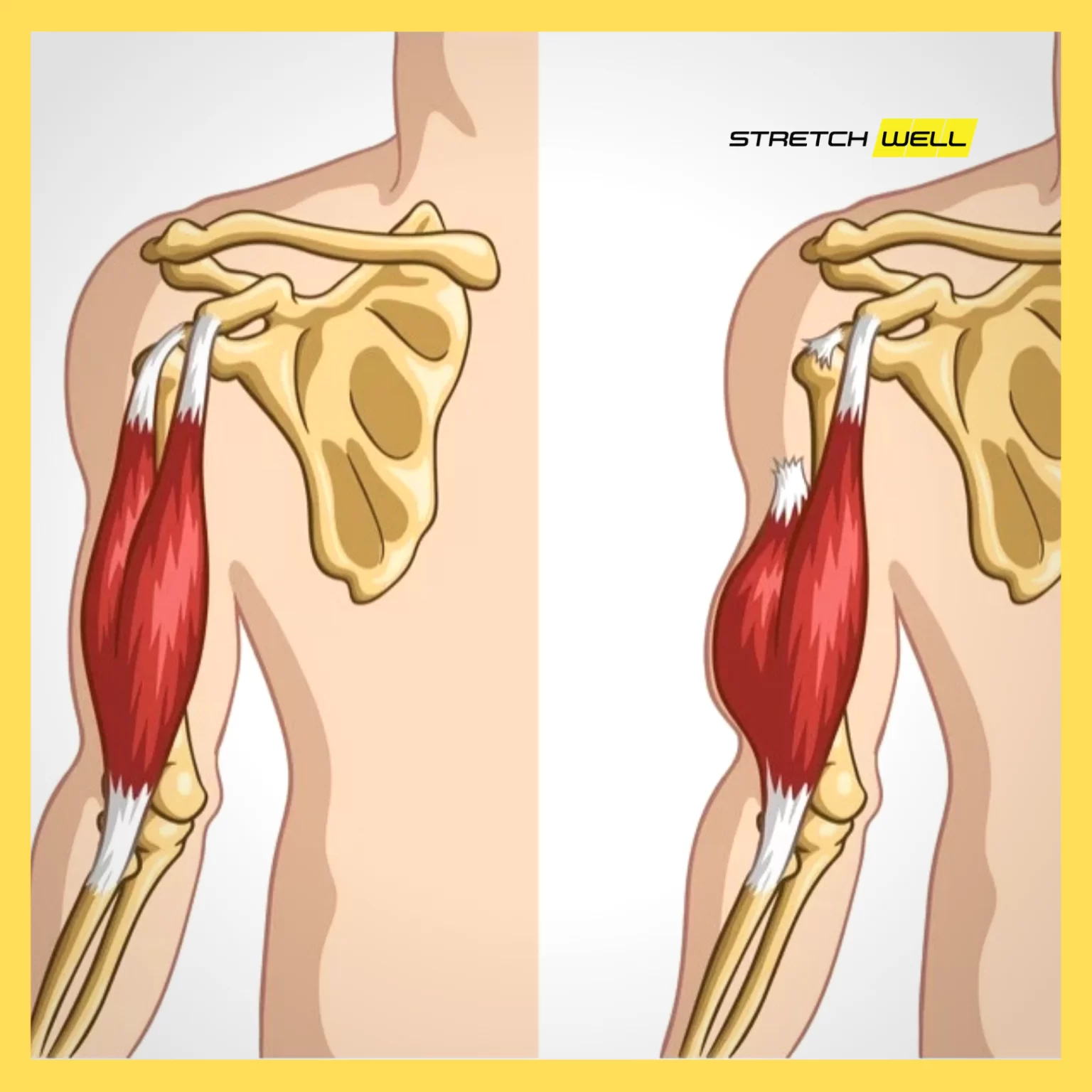
A muscle rupture is defined as a complete or partial tear of muscle fibers or due to strain or rupture of a tendon.
In the case of biceps, there is mainly a strain or tearing (separation) of the tendon from the bone.
Tearing or straining can occur at the point where the biceps tendon meets the shoulder or at the point where it connects to the elbow.
Biceps rupture can be:
- Partial (when the tendon is partially damaged)
- Complete (the case when the tendon has detached from the bone)
There are three types of biceps tendon rupture, which are categorized based on the severity of the injury and the location where the injury occurred.
1 ) Proximal rupture of the biceps tendon in the shoulder
2 ) Distal inflammation of the biceps tendon or tendon rupture in the elbow
3 ) Inflammation or irritation of the long head of the biceps (microtrauma from daily movements)
Symptoms of biceps rupture:
- Island
- The appearance of hematomas
- High heat
- Pain at the site of the injury and/or pain that is reflected throughout the arm
- Weakness of the injured hand
- Difficulty turning the thumb
- A hole in the upper arm due to the tendon detached from the bone
The reasons why this injury occurs:
- Overuse of the same muscle groups (tennis, baseball)
- Exercise mode (not using the full range of motion of the muscles)
- Lifting a large load in the “deadlift” with one hand in pronation and the other in supination (the arm that is in supination is unconsciously in a slight bend, which enormously increases the tension in the biceps)
Recovery from a biceps rupture depends primarily on the severity of the injury itself.
What is recommended is:
- Rest (as little use of the injured hand as possible)
- Use of certain medications that will reduce inflammation or reduce pain in the hand
- After reducing the inflammation, physical therapy is recommended, which involves the use of certain exercises to restore the hand to its original function
In the most severe degree of injury (when the tendon is separated from the bone), surgery is recommended because in this way the tendon will be attached to the bone again.
After surgery, numbness or weakness in the arm may occur.
The recovery period depends on the severity of the injury. Even the slightest damage to the biceps tendon can distract the patient from normal activities for a minimum of 2 months, while more severe forms of injury require an even longer recovery period (4-6 months).