Introduction: Cortisol – a hormone that keeps us awake, but also exhausts us
Cortisol is a hormone that is naturally secreted in the adrenal glands and helps us respond to stress and stay focused. However, when it is constantly elevated, due to chronic stress, overload or lack of sleep, cortisol begins to disrupt the balance in the body.
In the long run, this can lead to sleep disturbances, feelings of fatigue, a decline in immunity, and trouble concentrating.
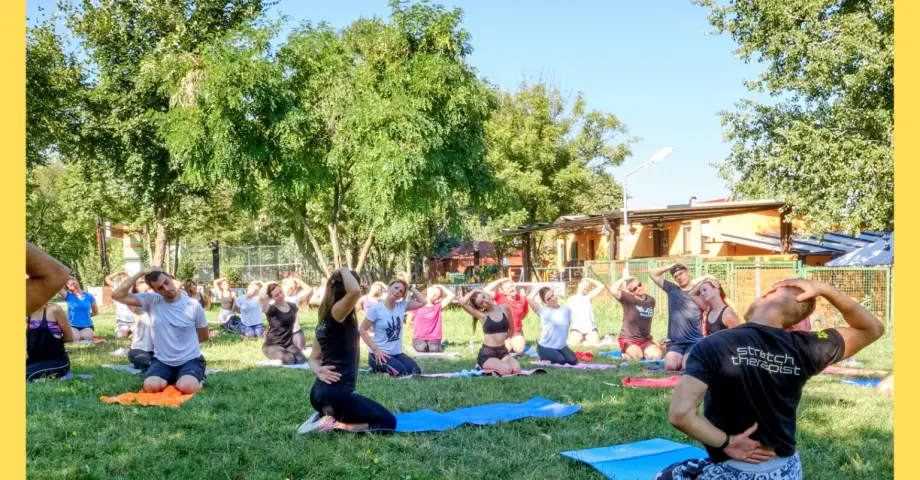
One of the most effective and completely natural ways for the body to find its balance again is stretching, a movement that affects not only the muscles, but also our nervous and hormonal systems.
What Happens In The Body When We Stretch
Stretching activates receptors in muscles and tendons (proprioceptors), which send information to the brain about the position and tension of the body. When stimulated through slow and controlled stretching, the brain recognizes that the body is no longer in danger and switches the nervous system from a “fight or flight” state to a “rest and regenerate” state.
This transition triggers a series of physiological reactions, slowing the heart rate, lowering blood pressure, and cortisol levels begin to decline.
Stretching as a regulator of the nervous and hormonal systems
Scientific research shows that just one stretching session of 20–30 minutes can lead to a decrease in cortisol levels in saliva and an increase in heart rate variability (HRV), which indicates stronger activity of the parasympathetic nervous system.
In other words, stretching physiologically calms the body and helps the body recover from stress more easily.
Long-term effects – how regular stretching changes the hormonal rhythm
When it becomes part of the routine, stretching helps stabilize the daily rhythm of cortisol. Studies show that regular, low-intensity programs, especially those involving conscious breathing, lead to lower morning and evening cortisol levels, as well as better hormonal balance.
The result is better sleep, more stable energy, and lower levels of chronic stress during the day.
Breathing – the most powerful ally in the fight against stress
Breathing is a key part of any StretchWell session. When we breathe slowly and deeply, about six breaths per minute, the vagus nerve, which connects the brain and internal organs, is activated.
This activation reduces pressure in the blood vessels, slows the heart rate, and sends a signal to the adrenal glands to reduce cortisol production.
That’s why the combination of stretching and proper breathing has such a powerful anti-stress effect.
Scientific basis: why the body reacts to stretching
Recent research in the field of neurophysiology shows that passive and PNF stretching affect mechanoreceptors in the fascia and muscles.
These receptors communicate with the central nervous system, reducing the tension signal and allowing the brain to “turn off” the stress response.
When this process is repeated, cortisol is naturally lowered, and the body returns to a state of balance more quickly.
How to Use Stretching to Reduce Stress
1 . A short routine of 15-20 minutes a day is sufficient.
Focus on slow movements and conscious breathing through your nose.
2 . Exercise in the afternoon or evening.
During this part of the day, cortisol naturally decreases, so stretching additionally helps the body prepare for rest.
3 . Do not chase the boundaries of pain.
The goal is not intensity, but conscious control and relaxation. Gentle pressure and steady breathing activate the parasympathetic nervous system, while straining can cause the opposite effect.
Stretching is more than just physical activity. It acts on muscles, the nervous system and hormones at the same time.
It reduces cortisol, improves circulation, calms the heart and restores the body’s ability to regulate stress on its own.
In a world that speeds us up every day, stretching becomes the simplest way to slow down and remind the body that breathing, movement, and stillness still speak the same language.