What’s the stress?
Stress is a set of non-specific reactions of the human body to harmful factors from the work and living environment. Harmful factors from the human environment activate the adaptation mechanism in the body in order to protect it by establishing a balance with the environment. The body responds in certain ways to a condition such as a threat, a challenge, or a physical and psychological barrier. The most important components of stress are:
- An event or situation in the environment
- A subjective assessment of the event
- Changes in psychological functioning.
- physiological changes
- Experience the whole process.
Given the speed of modern life and a rather “nervous” everyday life, our body is exposed to stress shocks, during which its balance is disturbed. Balance is one of the key things when it comes to a healthy body and mind. Stress, as a reaction, includes several phases:
- alarm phase – changes occur in the body
- adaptation phase – the body finds a way to return to homeostasis
- exhaustion phase – long-term stress that often leads to illness
What characterizes today is precisely the fact that the presence of stress in the body is almost constant and that the body is constantly in the “exhaustion phase”. It cannot defeat and eliminate the existence of so many stress factors, and the situation will certainly get out of control if we do not engage in freeing our body and returning it to its homeostasis. One of the best ways is to do some kind of physical activity. The key to choosing an activity that will be effective in this regard is to understand that each individual has their own character, emotions and the ways in which they express them, as well as the understanding of stress itself and, accordingly, the body’s reaction to the situation. You need to know your body and listen to what it is saying.
How to relieve stress?
Since ancient times, people have noticed a great connection between physical activity and health, that is, the possible impact of certain physical exercises on the quality of life, but also on the course of some diseases as well as on their lives.
Some of the physical activities that can contribute to restoring balance and resolving stress reactions in our daily lives can be:
Aerobic exercises – running, walking, swimming, cycling, hiking, dancing…
During these activities, breathing is accelerated, and thus the inflow of oxygen to the tissues, acceleration of heart rate and stimulation of circulation, which will contribute to better tissue nutrition and, most importantly, more efficient elimination of all harmful substances that accumulate due to various reactions that occur inside our body. In addition, there is the development of personal satisfaction, discipline, achieving new successes and goals, creating healthy habits, and all this together makes an individual feel good in his own skin and a positive impact on mental health. At the same time, training also gives effects of an aesthetic nature, which are an additional stimulus to the feeling of satisfaction and self-confidence.
Anaerobic activities – weight lifting, sprinting, stretching, yoga…
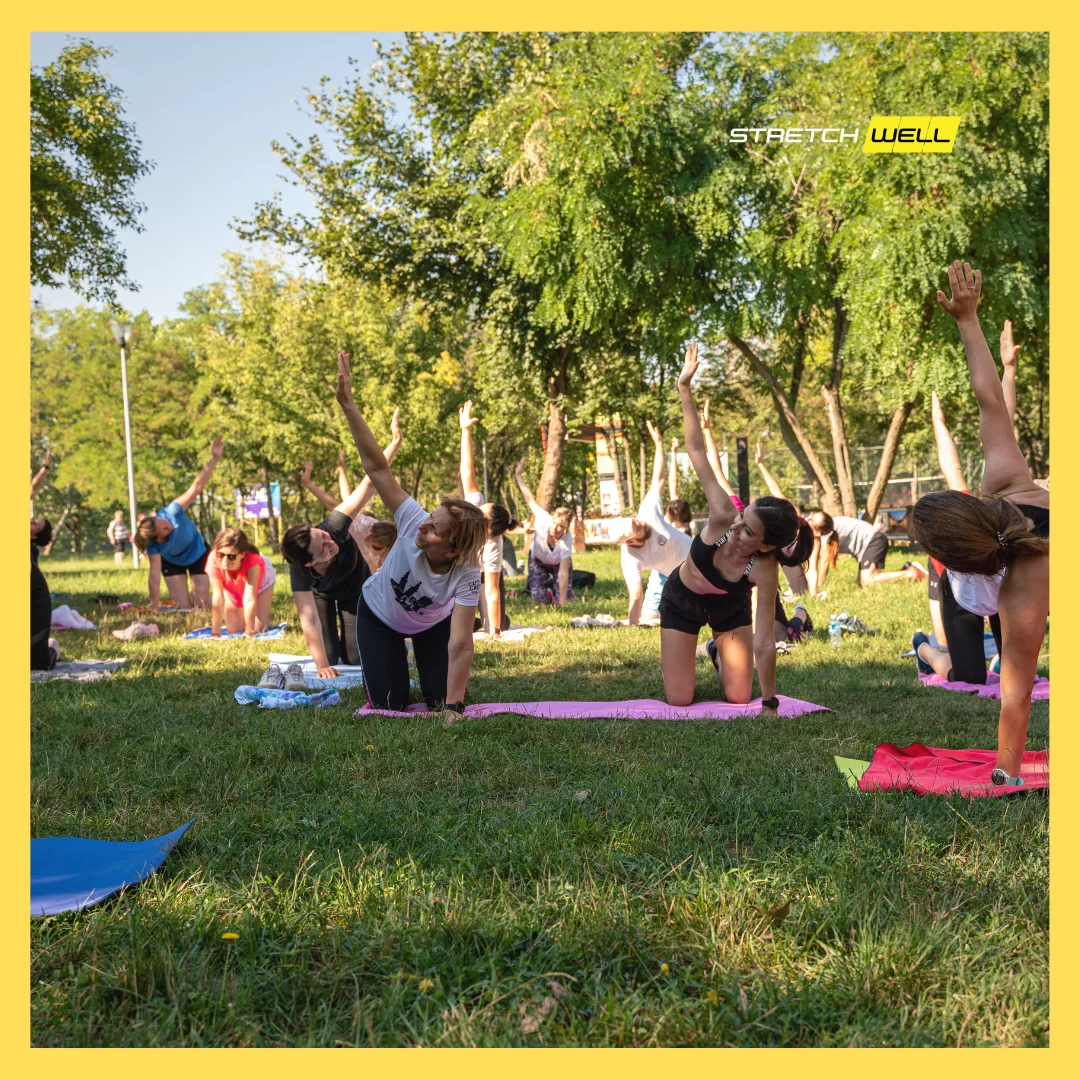
What is the advantage of stretching or yoga is that, in addition to all these effects of better circulation and mood due to the secretion of endorphins and the elimination of cortisol, due to the very nature of the activity, they lead to inhibition, i.e. calming the nervous system. Light movements, without many changes in direction and speed, will stabilize the work of the nervous system, thus regulating the course of other processes in our body. When we add conscious relaxation in the form of deep breathing and directing our thoughts to positive and beautiful things, our body and mind will have a much greater ability to eliminate stress and return to its homeostasis.
Taking all these facts into account, choosing physical activities to combat stress is certainly the right decision for which your body will thank you. The most important thing is to recognize your “stress valve” and use it in your everyday life, whether it is just one of these activities or some combination that will relieve your body and clear your mind.
However, in the end, the saying “in a healthy body, a healthy mind”, is very fact-based and should definitely be followed.